

Window of Opportunity Grant Project

Peterson Elementary
102 Philips Avenue, Red Springs, NC
Robeson County
Project: From Seeds to Science - An Experiential Outdoor Learning Project
Application Request/Project Summary:
Peterson Elementary
Project: From Seeds to Science - An Experiential Outdoor Learning Project
Project Overview / Narrative:
The proposed grant will create an exceptional opportunity for students at Peterson Elementary School to participate in enriching, hands-on science learning experiences that extend beyond the limitations of a traditional classroom. Peterson Elementary serves a community with a high percentage of low-income families, where many students have limited access to experiential learning opportunities outside of school. Establishing an outdoor classroom will provide a dynamic and inclusive learning environment that connects science instruction to real-world applications. Through interactive exploration of natural systems, environmental observation, and hands-on experiments, students will develop a deeper understanding of scientific concepts while strengthening critical thinking, problem-solving, and collaboration skills. This project will equip students with essential knowledge and practical abilities that will serve them well beyond their elementary years, fostering a lifelong curiosity and appreciation for the world around them.
The “From Seeds to Science: An Experiential Outdoor Learning Project” will deepen students’ academic learning while also strengthening their social skills, confidence, and sense of beauty and belonging in the school environment. By surrounding them with a diverse, colorful plant space, the project turns the outdoors into a calm, social gathering place.
Academic and STEM learning
-
Hands-on planting, observing growth, and tending beds helps students better understand plant life cycles, weather, soil, and ecosystems, which is linked to higher science achievement when gardens are integrated into instruction.
-
Working directly with real plants makes abstract concepts like measurement, data collection, and classification concrete, so children can count seeds, compare leaf shapes, and track changes over time in meaningful “real-world” ways.
-
Exposure to unfamiliar species (different colors, textures, and growth habits) expands students’ scientific vocabulary and curiosity, encouraging them to ask questions, make predictions, and notice patterns they would miss in a traditional classroom.
STEM objectives and standards
-
Kindergarten–grade 2 students will explore basic needs of plants and animals, compare living and nonliving things, and describe life cycle changes they see as their bushes and seasonal plants grow, aligning with early life science standards on living organisms and their environments.
-
Grade 2 focuses on pollinators in science and ELA so it would provide ways to bring both subjects together and allow students to see real life examples.
-
Grades 3–4 students will investigate more complex ideas such as plant reproduction, pollination, and how environmental changes affect organisms, supporting objectives related to diverse life cycles, adaptations, and ecosystems.
-
Across K–4, students will engage in science and engineering practices such as asking questions, planning and carrying out investigations, collecting data, and constructing explanations, which are central goals of STEM instruction.
Impact of diverse plant species
-
A biodiverse garden with many species becomes an “educational ecosystem,” where each plant and visiting insect offers a new lesson in interdependence, adaptation, and habitat.
-
Introducing plants students may never have seen before broadens their knowledge of food, cultures, and environments, and school gardens have been shown to increase children’s willingness to try new fruits and vegetables and appreciate unfamiliar foods.
-
Greater plant variety supports more insects and wildlife, so students can observe pollinators, decomposers, and seasonal changes firsthand, strengthening understanding of biodiversity and environmental stewardship.
Beauty, well-being, and focus
-
Lush, colorful plantings create a visually beautiful space that captures children’s attention and makes them more engaged and motivated to learn compared with bare or purely indoor settings.
-
Time in green, natural spaces is associated with reduced stress and anxiety and improved overall well-being, which helps students regulate emotions and come back to academic tasks with better focus and persistence.
-
Sensory-rich gardens, filled with varied colors, scents, and textures, support different learning styles, helping students who struggle in traditional settings connect more positively with school and learning.
Social skills and collaboration
-
Outdoor classrooms naturally promote teamwork as students share tools, plan beds, and work together on garden tasks, which strengthens cooperation, communication, and problem-solving.
-
Group activities in the garden give children structured opportunities to practice turn-taking, listening, helping peers, and negotiating roles, all of which are key social-emotional skills.
-
Because natural spaces can lower tension and create a more relaxed atmosphere, students are more likely to talk with one another, build friendships, and develop empathy and respect while working and playing outside.
Sense of ownership and community
-
Caring for living plants gives students a concrete sense of responsibility and pride; research on school gardens notes gains in self-understanding, self-esteem, and personal responsibility through regular participation.
-
Creating and maintaining a beautiful garden space together helps students feel a stronger sense of belonging, fellowship, and community at school, especially when the garden becomes a shared destination for classes and families.
-
As students see their work transform an ordinary area into a vibrant outdoor classroom, they develop a lasting connection to the environment and a desire to protect and care for their school and the natural world.
Expected Outcomes of Student Learning
The outdoor classroom at Peterson Elementary will provide students with meaningful, hands-on experiences that promote academic growth and social development. Students will engage in experiential learning opportunities such as planting, observing, and measuring plant growth that strengthen their understanding of scientific concepts and foster real-world problem-solving skills. These activities will encourage students to think critically, work collaboratively, and make connections between classroom instruction and the natural environment.
In addition to building scientific knowledge, students will enhance their literacy and math skills by maintaining observation journals, creating charts and graphs, and writing reflections about their discoveries. This integrated approach will support reading and writing development while reinforcing data interpretation and analysis. Overall, the outdoor classroom will empower students to take ownership of their learning, develop curiosity and responsibility, and gain practical skills that will benefit them throughout their academic journey and beyond.
Project Site Photos
KNCB Visit / Pre-project

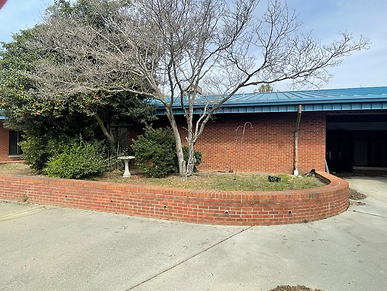


Project Development
Project Development Photos Coming
Soon...
Project Completion Photos
Project Completion Photos Coming
Soon...